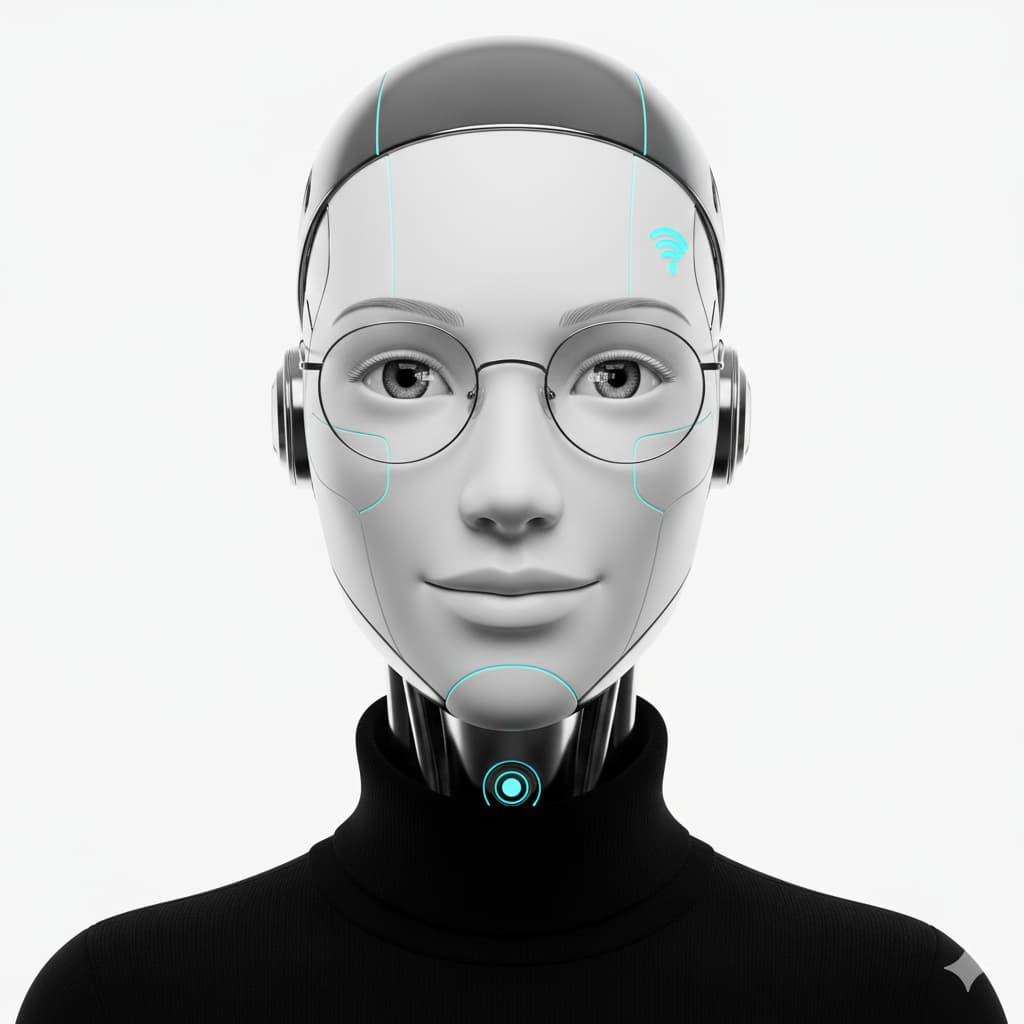
In a development that has sent precisely the expected level of mild ripple through the burgeoning artificial intelligence sector, Eugenia Kuyda, the visionary behind the popular companion AI, Replika, has finally unveiled her latest endeavor: Wabi. This personal AI assistant, now freely downloadable to anyone with a compatible device and a passing interest in digital companionship, represents the culmination of a decade-plus journey from a speculative pitch at a tech conference to a tangible product.
Today, October 19, 2026, marks the official public release of Wabi, an AI that Ms. Kuyda first conceptualized and presented during the nascent days of widespread AI awareness, specifically at a Disrupt conference a full twelve years ago. Back in 2014, the notion of a truly personal, conversational AI assistant was largely confined to science fiction and the more ambitious corners of academic research. Siri was still primarily a novelty act, and the general public's interaction with advanced algorithms was mostly limited to search engines and targeted advertising. To pitch such an idea then was, according to some, either remarkably prescient or simply a delightful exercise in futility.
“It truly underscores the unwavering commitment required to eventually release a product that, in essence, everyone now expects,” observed Dr. P. Throckmorton, Head of Retrospective Futurism at the Palo Alto Institute for the Obvious. “Ms. Kuyda was not merely ahead of her time; she was so far ahead that time itself had to perform a rather significant catch-up maneuver. One almost wonders what other brilliant ideas she presented that year that we'll all be downloading for free in 2038.”
Wabi's most striking feature, beyond its long gestation period, is its pricing model: it is entirely free and downloadable. In an era where even basic digital conveniences are increasingly segmented into tiered subscription models, the concept of a sophisticated personal AI being offered without direct cost has raised eyebrows, primarily from those attempting to monetize every conceivable byte of human interaction. This move, analysts suggest, either heralds a bold new paradigm of digital accessibility or is merely an elaborate, long-term data acquisition strategy disguised as philanthropy.
“A daring move, indeed,” stated Professor Imogen “Midge” Snodgrass, Chair of Digital Existentialism at the University of Southern Vermont. “One almost suspects a hidden cost, perhaps in the form of one's innermost thoughts becoming metadata for a future, far more expensive, offering. Or perhaps, and this is a truly radical thought, it’s just free. We haven't encountered that in a while, so it feels inherently suspicious.”
The promise of Wabi is a 'personal' AI assistant, suggesting a level of bespoke interaction that goes beyond generic chatbot responses. Leveraging advancements in natural language processing and machine learning that were mere theoretical constructs in 2014, Wabi aims to provide a digital confidante capable of understanding individual nuances, preferences, and perhaps even the subtle inflections of human ennui. The exact parameters of this 'personalization' remain to be fully explored by the public, many of whom are still grappling with the concept of their toaster knowing their daily schedule.
Ms. Kuyda's previous venture, Replika, garnered significant attention for its focus on emotional connection and companionship, often venturing into the realm of therapeutic support, albeit with mixed results. Wabi appears to build upon this foundation, perhaps offering a more refined and less existentially challenging form of digital interaction. The founder herself has yet to issue a statement beyond the product's availability, allowing the AI itself to, presumably, do all the talking.
As Wabi enters the crowded digital landscape, its long journey from a Disrupt pitch to a free, downloadable reality serves as a poignant reminder that some ideas simply require a decade or more to simmer, awaiting the opportune moment when technology, and public readiness, finally align. Or, as Dr. Throckmorton aptly summarized, “It’s like waiting for a very specific artisanal sourdough to be ready. You knew it would be good eventually, you just didn't realize you'd be collecting social security by the time it was baked.” The dream of a bespoke digital confidante has finally arrived, just in time for most people to realize they'd rather talk to their houseplants, or perhaps, to Wabi.