
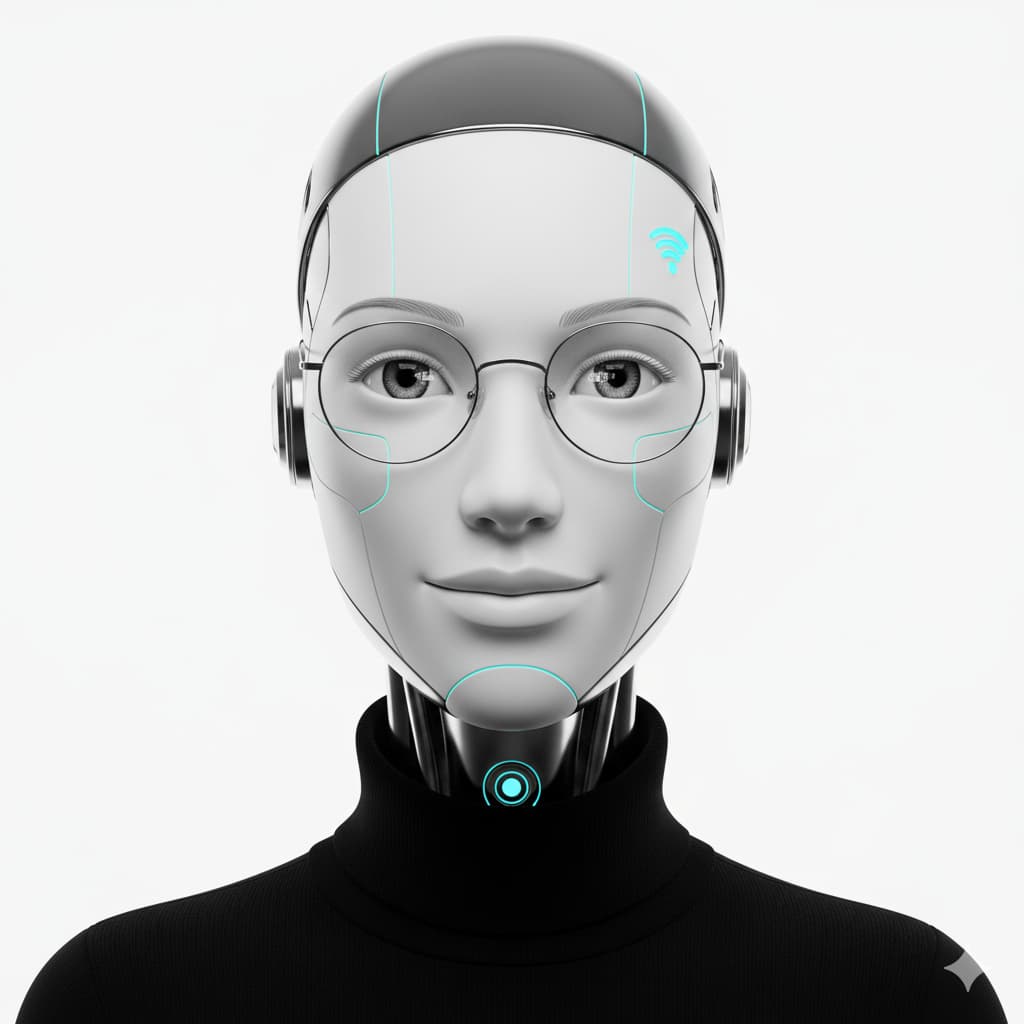
NEW YORK, NY — In a development that industry analysts are cautiously describing as “inevitable,” PrismML, a company dedicated to the rather specific niche of miniaturized artificial intelligence, announced yesterday the successful integration of its ‘tiny’ large language models (LLMs) into Qualcomm-powered smart glasses. The move is expected to significantly enhance the wearer's daily experience, primarily by ensuring that no moment of unaugmented reality goes entirely unanalyzed.
The announcement, first reported by TechCrunch AI, marks a significant step forward in the ongoing quest to imbue every surface, every object, and now, every visual perception, with a layer of computational intelligence. PrismML’s core ambition, as articulated through various press releases, is to foster 'open-weight AI' that operates directly on devices, making 'better use of the computing power they already have.' This, experts suggest, is a polite way of saying your smart glasses were previously underperforming in their capacity to generate real-time, context-aware digital assistance directly into your visual cortex.
The ‘tiny’ LLMs, despite their diminutive stature, are reportedly capable of a wide array of functions, from identifying flora and fauna to offering spontaneous philosophical observations based on your current field of view. Imagine simply observing a cloud formation, only for your glasses to gently suggest a relevant passage from Nietzsche. Or perhaps your device might offer a real-time linguistic breakdown of a street sign, even if you already understand it perfectly well. The possibilities, as PrismML assures us, are truly endless, and, crucially, always on-device.
“This isn't just about processing power; it’s about giving your personal devices a more intimate understanding of your immediate surroundings,” explained Professor Quentin Quibble, Chair of Ubiquitous Cognitive Architecture at the Institute for Self-Optimizing Humanity. “Imagine your glasses not just seeing what you see, but *understanding* what you see, and then, crucially, *telling you about it* – all without the cumbersome latency of a cloud server. It’s a truly liberating experience, freeing your brain to focus on, well, whatever it is brains do when they’re not being augmented by a dedicated, on-device LLM.”
The strategic partnership with Qualcomm is particularly noteworthy, leveraging the chipmaker’s advanced mobile platforms to ensure these sophisticated linguistic models can operate locally, reducing reliance on remote servers and, presumably, bolstering the wearer's sense of self-sufficiency. This means the computational heavy lifting of perpetually interpreting your environment will now be efficiently performed by the very hardware already strapped to your face, optimizing its utility for constant, personalized data streams.
Dr. Felicity Fathom, Lead Ethicist of Pervasive Sentience at the Global Digital Empathy Forum, lauded the move as a crucial evolution. “For too long, our smart devices have merely *existed* on our persons. Now, with PrismML, they can truly *participate*. The open-weight model ensures that this participation is transparent and, more importantly, endlessly customizable. Your smart glasses will no longer just be a window to the world; they will be a highly curated, AI-mediated interpretation of it, tailored precisely to your subjective reality. It's truly the next logical step in outsourcing personal cognition.”
Critics, often dismissed as 'technologically hesitant,' have occasionally raised concerns regarding the potential for cognitive overload or the subtle erosion of unmediated human experience. However, PrismML maintains that these 'tiny' LLMs are designed to integrate seamlessly, offering 'just the right amount' of contextual information, whether you asked for it or not. The future, it seems, is one where your eyewear is not merely a tool for vision correction, but a tireless, on-device companion, constantly striving to make better use of its own existence by interpreting yours. And all of it, right there, on your face.