PHILADELPHIA, PA – In an era defined by the inexorable march of artificial intelligence and its attendant demands for ever-more processing power, humanity finds itself at a curious crossroads: where to house the digital behemoths required to sustain this progress? The answer, according to some forward-thinking strategists, appears to be precisely where humanity has, historically, left its greatest physical scars.
National outcry against the proliferation of gargantuan, energy-guzzling data centers has reached a crescendo in recent months, spreading like wildfire from the pristine suburbs to the rust-belt heartlands. Yet, amidst this cacophony of concern, Philadelphia has emerged as a surprising potential frontier, with city officials reportedly suggesting a novel solution: repurpose a neighborhood already indelibly impacted by the now-defunct Philadelphia Energy Solutions oil refinery. The irony, some might suggest, is as thick as the lingering petrochemical residue.
The proposal, detailed in a recent TechCrunch AI report, pits the shimmering promise of a high-tech future against the very tangible, often toxic, legacy of a bygone industrial age. Critics, often dismissed as 'obstructionists allergic to prosperity,' argue that replacing one form of industrial blight with another, albeit one that hums rather than smokes, might not constitute genuine 'progress.' Proponents, however, view it as an elegant solution to a complex problem, neatly sidestepping the NIMBYism prevalent in more aesthetically discerning locales.
“It’s simply a matter of optimizing underutilized assets,” explained Rex Mundi, CEO of TerraForm Solutions, a consultancy specializing in the “reimagining of sub-optimal land for the digital age.” Mr. Mundi, speaking from a yacht anchored somewhere with excellent broadband, elaborated, “These areas come with pre-existing infrastructure – roads, power lines, and, crucially, a population already accustomed to… let’s call it a ‘robust’ industrial aesthetic. We’re not asking them to suddenly appreciate a pristine wetland; we’re offering them a new kind of hum.”
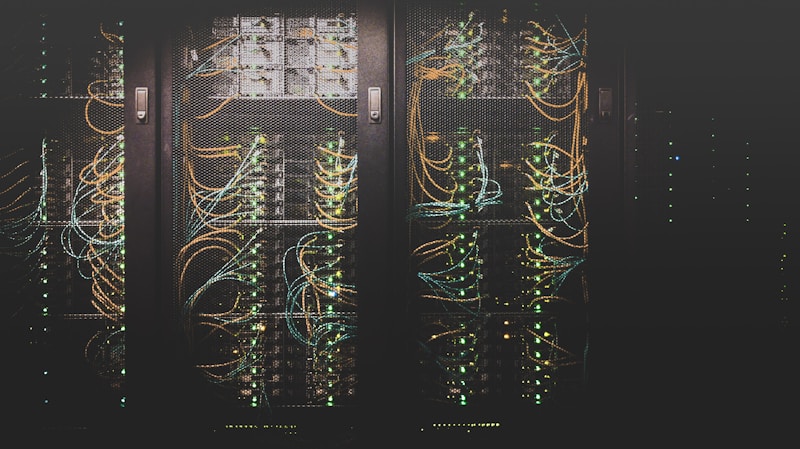
The hum in question, of course, is that of millions of servers, tirelessly crunching algorithms, generating heat, and consuming vast quantities of electricity and water. Data centers, the physical manifestation of the digital cloud, are notoriously thirsty and power-hungry entities. Locating them in areas already grappling with environmental justice issues, some argue, merely adds insult to pre-existing injury, albeit with a significantly higher processing speed.
Dr. Seraphina Byte, Professor of Post-Industrial Symbiosis at the Institute for Futurist Urban Decay, offered a more philosophical perspective. “What we’re witnessing,” she mused, adjusting her artisanal spectacles, “is the logical conclusion of unchecked technological advancement meeting the equally unchecked desire for convenience. When AI demands a home, it naturally gravitates towards spaces that have already demonstrated a remarkable tolerance for… significant industrial presence. It’s a testament to the resilience of the human spirit, or perhaps, its profound capacity for resignation.”
Indeed, the concept of placing advanced AI infrastructure amidst the skeletal remains of heavy industry presents a compelling tableau. Imagine, if you will, the stark, windowless façade of a colossal data center rising from the ashes of a refinery, its cooling towers gently steaming, a testament to the fact that while some industries fade, the need for an ever-faster TikTok feed endures. It’s a vision of the future that is both undeniably pragmatic and subtly terrifying, a monument to humanity’s enduring ability to adapt, or perhaps, simply to endure.
Local community leaders, many of whom have spent decades advocating for environmental remediation and economic revitalization, are now faced with a new kind of choice: the devil they know, or the digital devil they don’t. The promise of jobs, however scarce and specialized, is being dangled like a digital carrot. “We were promised green spaces, clean air, a future free from industrial pollution,” commented one anonymous resident, whose family has lived near the refinery for three generations. “Now, it seems, we’re being offered the future of the internet. It’s… different.”
As the nation grapples with the existential questions posed by AI, Philadelphia’s predicament serves as a stark, if somewhat darkly comedic, reminder that even the most ethereal technologies require a very concrete, very physical home. And sometimes, that home is found in the places we’ve tried hardest to forget, only to find them repurposed, re-energized, and ready to host the next iteration of human progress, one server rack at a time.